Gone Before You Knew It Started: The Design Tricks That Turn Your Quick Spin Into a Two-Hour Session
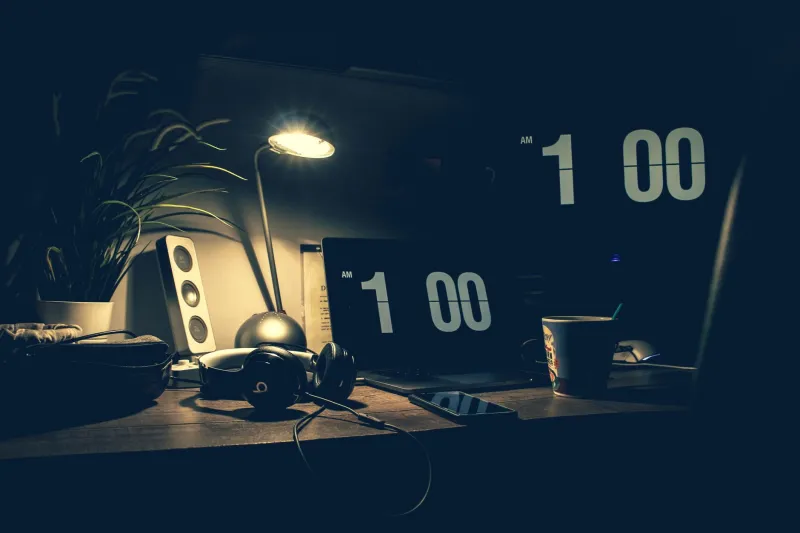
Dave from Wollongong has a rule. Fifteen minutes, maybe twenty, then he's done. He set that rule himself, he believes in it, and he breaks it almost every single time he opens Wild Fortune on his phone.
"I'll tell myself I'm just going to use up the free spins or whatever," he said. "And then I look up and it's midnight and I've got work in six hours."
Dave isn't unusually impulsive or unusually bad at self-control. He's an ordinary bloke who keeps running headfirst into a system that was built — with considerable skill and investment — to make time feel optional.
The Interface Is Not Neutral
This is the thing most players don't fully reckon with: the screen you're looking at is not a passive window into a game. It's an active environment, shaped by user experience designers, behavioural psychologists, and data analysts whose collective job is to keep you engaged for as long as possible.
Every element of a modern online casino interface has been iterated, tested, and refined based on how real players respond. The button placement, the colour palette, the way notifications appear, the speed of animations — none of it is arbitrary. It's the product of hundreds of design decisions, each one nudging you in a specific direction.
And the direction is always the same: stay a little longer.
Auto-Spin: Convenience or Commitment?
Auto-spin is probably the single most time-collapsing feature in online slots. The pitch is simple — set a number of spins, sit back, watch it run. It's framed as convenience, a way to enjoy the game without the repetitive clicking.
What it actually does is remove the decision point between spins. Normally, each spin requires a small, conscious act: you press the button. That moment of action is also a moment of choice — a tiny window where you could decide to stop. Auto-spin eliminates those windows entirely.
Ten spins becomes fifty becomes two hundred before you've made a single active decision to continue. The game is simply happening to you at that point, and time is moving without your participation.
Some players use auto-spin responsibly with strict loss limits attached. That's the version of auto-spin that makes sense. But using it without limits is essentially handing the controls over and hoping for the best.
The Absence of Clocks Is Not an Accident
Look at the Wild Fortune interface — or any online casino — and notice what's not there. No clock. No session timer ticking away in the corner. No ambient cue that time is passing.
Land-based casinos are famous for this: no windows, no clocks, carefully controlled lighting that doesn't change with the time of day. Online platforms can't remove your windows, but they can keep their own interface completely free of temporal anchors.
Your phone has a clock, obviously. But when you're in full-screen mode, focused on the reels, actively engaged with a bonus round — how often are you actually checking it? The design assumes you're not. It's built around your distraction.
Notifications That Pull You Back In
The session design doesn't only operate while you're playing. It also operates in the gaps — the moments when you've put the phone down and are theoretically doing something else.
Push notifications from gaming apps are engineered to re-engage players who've drifted away. "Your free spins are waiting." "A new bonus has just dropped." "It's been a while — come back and spin." These messages are targeted and timed based on individual player behaviour patterns.
For someone like Dave, who was just about to stop for the night, a notification arriving at 10pm with a free bonus offer doesn't feel like marketing. It feels like an invitation. And accepting it resets the clock on his intended fifteen-minute session.
Real Players, Real Fixes
The good news is that real players have worked out real countermeasures, and most of them are refreshingly low-tech.
Mel from Brisbane sets a phone alarm — not a timer, an actual alarm — for the time she wants to stop. "A timer you can just restart. An alarm that says 10:30pm feels different. It's like an appointment with myself."
Tom from Perth uses the deposit limit and session time tools in Wild Fortune's responsible gaming settings before he starts playing. "If I set a two-hour limit before I'm excited about anything, I'm making the decision when I'm calm. Once I'm in a session, I'm not calm."
Jess from Melbourne turns off all push notifications from gaming apps. "I'll open the app when I decide to play. I don't need the app deciding for me."
None of these strategies are complicated. What they have in common is that they front-load the decision-making to a moment before the session starts — before the interface has had a chance to work on you.
The Fifteen-Minute Session That Actually Stays Fifteen Minutes
Having a short, enjoyable session at Wild Fortune is genuinely possible. Plenty of players do it regularly. The difference between them and Dave isn't willpower — it's systems.
If you want your quick play to stay quick, here's what actually works:
- Set your session limit in the platform before you open a game. Wild Fortune's tools exist for exactly this reason.
- Use a real alarm, not a mental note. Mental notes lose to bonus rounds every time.
- Disable auto-spin, or use it only with loss limits attached. Keep the decision points in your session.
- Turn off gaming app notifications. You'll open the app when you want to play, not when the app wants you to.
- Tell someone. Letting a partner or housemate know you're having a quick spin creates gentle external accountability.
Dave's trying the alarm method now. Early results are promising. "It sounds so simple," he said. "But apparently I needed something louder than my own brain."
Most of us do.