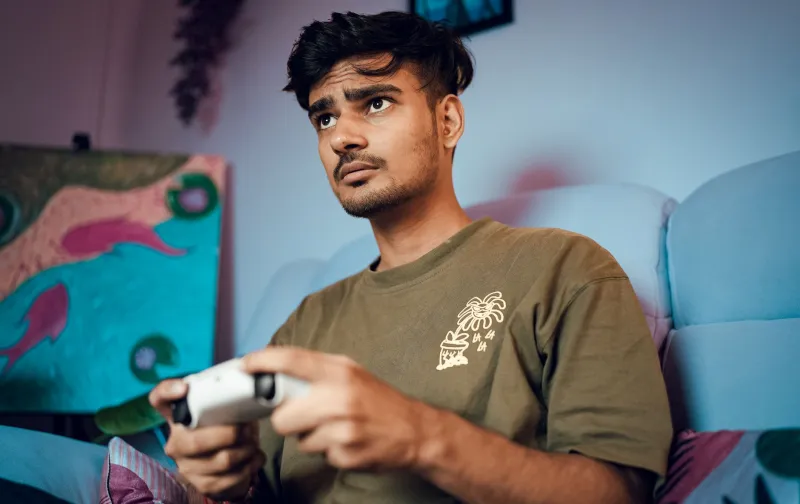
Midnight Mischief: How Playing Past Bedtime Is Quietly Costing Aussie Casino Players More Than They Realise

There's a very specific kind of logic that only makes sense after midnight. The logic that says one more spin is fine. That you've got nothing on tomorrow anyway. That the losses from the last hour don't really count because, honestly, the whole session feels a bit dreamlike at this point.
If you've ever sat in the blue glow of a screen at 2 or 3am, watching your balance do things your 9pm self would never have allowed, you're not alone. Late-night gaming is incredibly common among Australian players — and it's not a coincidence that it's also where a lot of the worst decisions get made.
This isn't a lecture. It's an honest look at what's actually happening in your brain when you play deep into the night, and why understanding it might be the most practical slots strategy you ever pick up.
Your Brain After Midnight Isn't the Same Organ
Here's the thing about sleep deprivation that most people don't appreciate: you don't have to feel tired for it to be affecting your judgement. Research into circadian rhythms — the internal body clock that governs everything from hormone release to reaction time — consistently shows that cognitive performance starts declining well before most people feel genuinely sleepy.
By around 11pm for the average adult, the prefrontal cortex (the part of your brain responsible for planning, impulse control, and risk assessment) is already running at reduced capacity. By 1am, it's operating more like a passenger than a driver. By 3am? You're essentially making financial decisions with the strategic acuity of someone who's had a few too many at the pub.
The cruel irony is that the part of your brain that would normally flag this as a problem is the exact part that's gone quiet. You don't feel reckless. You feel calm, focused, maybe even sharper than usual. That's not clarity — that's the absence of the internal voice that usually pumps the brakes.
The 'Freedom' Illusion That Midnight Creates
There's a cultural dimension to this that's worth naming, especially for Aussie players. Late-night gaming often carries a particular psychological flavour: the sense that you've escaped the obligations of the day. The kids are in bed. The work emails have stopped. The flatmates are asleep. It's finally just you.
That feeling of freedom is real — but it gets hijacked in ways that aren't obvious. Without the external structure of daytime responsibilities, there's nothing anchoring your session to a defined end point. The usual cues that tell you to stop — dinner time, a phone call, somewhere to be — have all disappeared. What replaces them? Nothing. Just the next spin.
Researchers who study gambling behaviour refer to this as a collapse in temporal framing. Basically, when there's no looming obligation, the future feels abstract. Losses that would feel significant at 7pm feel strangely distant at 2am, because your brain isn't mapping them onto tomorrow's reality with any precision.
Dopamine Doesn't Clock Off, But Your Filters Do
Here's where the chemistry gets interesting. The dopamine system — the reward circuitry that makes spinning the reels feel exciting — doesn't wind down the same way your decision-making does. If anything, sleep-deprived brains show heightened sensitivity to reward stimuli, which is why a near-miss at 3am can feel more electric than one at 3pm.
But that heightened sensitivity comes with a cost. The filtering mechanism that helps you evaluate whether a reward is actually worth pursuing? Significantly impaired. So you're feeling the pull of potential wins more intensely while simultaneously being less equipped to assess whether chasing them makes any sense.
It's a genuinely nasty combination. More excitement, less judgement. And it's not a character flaw — it's biology doing exactly what it was built to do, just in a context it wasn't built for.
What the Patterns Actually Look Like
If you track your own gaming history — and Wild Fortune AU makes this pretty easy to do — you'll often find a clear pattern: sessions that start in the evening and run past midnight tend to end with a higher net loss than sessions of equivalent length that wrap up before 11pm.
This isn't because the slots behave differently. RTP doesn't change based on the time of day (we've covered that before). What changes is bet sizing. Late-night players are significantly more likely to increase their stakes after a losing run, to skip over the mental check-in that asks 'should I still be playing?', and to rationalise one more deposit as a reasonable decision.
The session that started with a sensible $50 budget at 9pm can look very different by 1am, not because the player is reckless, but because the cognitive architecture that enforces budget discipline has been quietly dismantled by exhaustion.
Practical Time Boundaries That Actually Work
Knowing all this is useful. But knowing it at 1:30am, mid-session, is a different challenge entirely — because the brain state that would act on this information is already compromised. That's why the strategies that work best are the ones you put in place before you sit down to play.
Set a hard stop time before you start. Not a vague intention to wrap up 'around midnight', but an actual time. Some players find it helpful to set a phone alarm labelled something direct, like 'Session over — close it down.' The external prompt does the work your internal judgement might not.
Tie your session to a daytime anchor. If you know you've got an early start, a gym session, or even just a morning coffee you actually want to enjoy, name that thing before you begin. It makes the future feel concrete rather than abstract, which helps preserve your temporal framing.
Use the platform's session tools. Wild Fortune AU has session limit settings for exactly this reason. A time limit you've set while clear-headed is a much better decision-maker than the version of you at 2am who's convinced 20 more minutes will turn things around.
The one-hour warning rule. If you're planning to play in the evening, decide that you'll stop one hour before you need to be in bed, not one hour before you want to. That buffer gives your brain time to decompress before sleep, and it cuts off the session at a point where your judgement is still reasonably intact.
The Bigger Picture
None of this means late-night gaming is inherently bad, or that enjoying a session after dark is some kind of red flag. Plenty of Aussie players have perfectly good sessions in the evening. The point is that the later it gets, the more the odds shift — not on the reels, but in your head.
The smartest thing you can do is treat your own cognitive state as part of your strategy. The same way you'd factor in volatility or bankroll when choosing a game, factor in the time. Because the most important variable in any session isn't the RTP or the bonus features — it's the quality of the decisions you're making while you play.
And at 3am, that quality is quietly, reliably, lower than you think.