Leaving Money on the Table (In the Worst Possible Way): The Real Cost of Spinning Your Winnings Back In

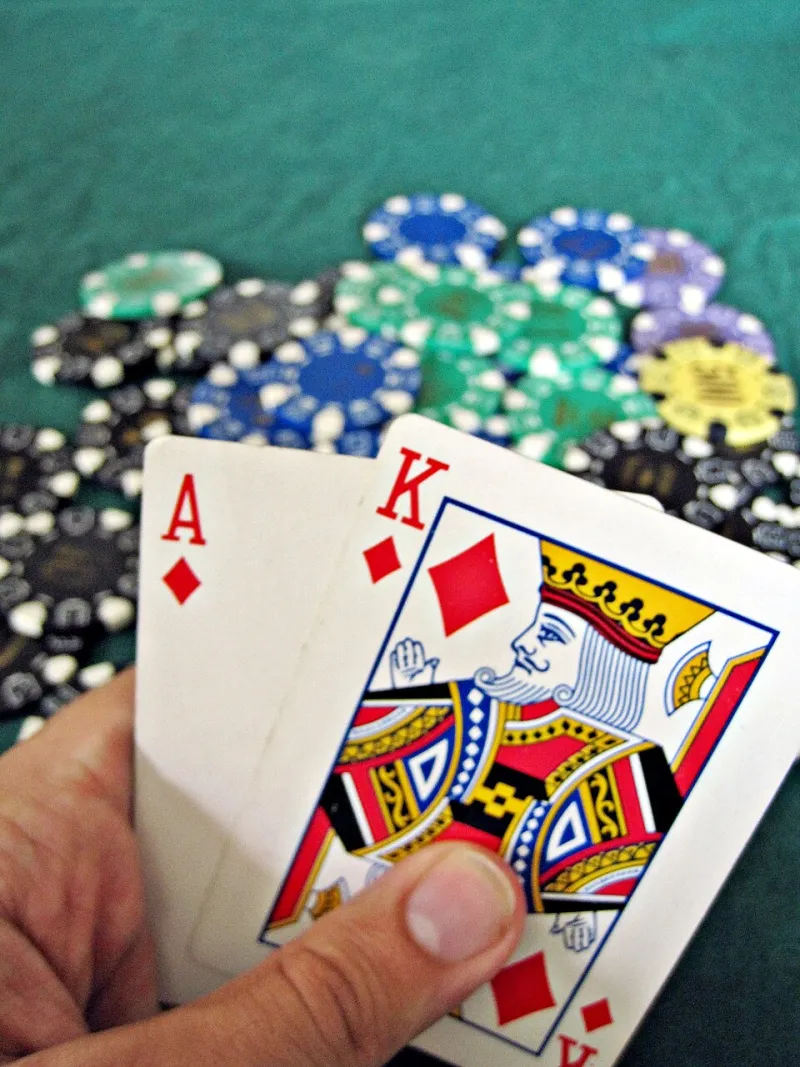
Photo: The original uploader was Snow storm in Eastern Asia at English Wikipedia., CC BY 3.0, via Wikimedia Commons
You're thirty minutes into a session and something good happens. The reels line up, the numbers tick over, and your balance jumps. Could be $40, could be $200 — doesn't matter. You've got more than you started with.
Now the question: do you bank any of it?
For a significant chunk of Aussie players, the answer is no. Not yet. Maybe after a few more spins. The logic feels sound in the moment — it's not really your money, you didn't bring it to the session, so what's the harm in letting it ride?
A lot, as it turns out. And the reason it's so costly isn't about the math — it's about the way your brain is quietly mislabelling the money in your account.
The 'House Money' Illusion
Behavioural economists have a name for this: the house money effect. It was documented by researchers Richard Thaler and Eric Johnson back in the late 1980s, and it describes a very human tendency to treat money we've recently won as fundamentally different from money we earned or brought with us.
The logic, if you can call it that, goes: I only brought $100 to this session. The extra $80 I've won isn't really mine yet. So I can afford to be riskier with it.
Except the $80 is absolutely yours. It's sitting in your balance. If you withdrew it right now, it would be in your account by tomorrow. The only thing separating it from 'real' money is a story you're telling yourself.
And that story is expensive.
Why the Win Creates False Confidence
There's a second layer to this that goes beyond just mislabelling the money. Winning mid-session — especially a meaningful win — generates a genuine emotional response. Your brain registers it as a positive event, and in the short term, that translates into something that feels a lot like confidence.
You feel like you're reading the session correctly. Like you've got a handle on things. Like the game is going your way.
None of that is true in any mechanical sense — the next spin on a pokie is just as random as the one that paid out. But the feeling of momentum is real, and it changes how you bet. Players who've just hit a significant win consistently show a tendency to:
- Increase their stake on subsequent spins
- Extend their session beyond their original plan
- Dismiss the idea of cashing out as unnecessarily cautious
Combine inflated confidence with money you're treating as 'free', and you've got a scenario where a win can actually accelerate your losses.
Mental Accounting: The Framework That's Working Against You
The broader concept here is mental accounting — the way humans mentally sort money into different buckets based on where it came from or what it's 'for', rather than treating all dollars as equal.
We all do this in everyday life. The tax return you blow on something frivolous. The birthday cash you spend on yourself when you'd never normally splurge. The bonus that goes straight to a holiday fund without passing through your regular budget.
Mental accounting isn't always bad. But in a casino context, it creates a specific problem: your winnings get filed into a 'play money' bucket rather than a 'real money' bucket, which means you apply none of the normal caution you'd apply to your own funds.
The result? Players who win $150 mid-session and end up finishing $200 down — having essentially donated their winnings and burned through their original budget. The win happened. It just didn't stick.
The Anatomy of a Session That Goes Sideways
Here's what this often looks like in practice at Wild Fortune AU:
Opening phase: Player deposits $100, plays steadily, hits a run and gets to $180.
Decision point: Player thinks 'I'm up $80, I'll keep playing with the winnings and protect my original $100.' This sounds disciplined. It isn't, because there's no actual mechanism to protect anything — it's all in the same balance.
Escalation phase: Emboldened by the win, player increases bet size slightly. A few big swings follow. Balance fluctuates.
The fade: Over the next 40 minutes, the balance drifts back down. Player keeps thinking 'I'm still ahead' until they're not — and then they're chasing.
End state: Player finishes the session down on their deposit, having experienced a significant win that left no trace.
This isn't an unusual story. It's one of the most common session arcs there is.
A Simple Framework for Treating Winnings Like Real Money
The fix isn't complicated, but it does require a bit of deliberate habit-building.
Set a 'lock-in' rule before you start. Decide in advance: if I hit X amount above my starting balance, I withdraw Y. Make it concrete. 'If I get to $150 from $100, I withdraw $50.' Done. Non-negotiable.
Treat your balance as one number, not two. There's no 'house money' column and 'my money' column. There's just your balance. Check it, own it, make decisions based on the total.
Use the withdrawal function like it exists for a reason. Online platforms like Wild Fortune AU have withdrawal options for exactly this moment. A partial withdrawal mid-session is completely legitimate. It's not 'giving up' — it's playing with your head.
Reframe what cashing out means. It's not a failure to stop playing. It's converting an unrealised gain into a realised one. Every dollar you withdraw is a dollar the session can't take back.
The Win Is Only Real If You Keep It
Hitting a good win during a session at Wild Fortune AU is a great feeling. You should enjoy it. But enjoyment and smart play aren't mutually exclusive — you can savour the moment and put some of that balance somewhere the reels can't touch it.
The players who walk away from sessions genuinely ahead aren't the ones who run the hottest. They're the ones who treat a win as a win — not as permission to keep going.