Slots or Tables? The 'Smarter Choice' Myth That's Quietly Costing Aussie Players
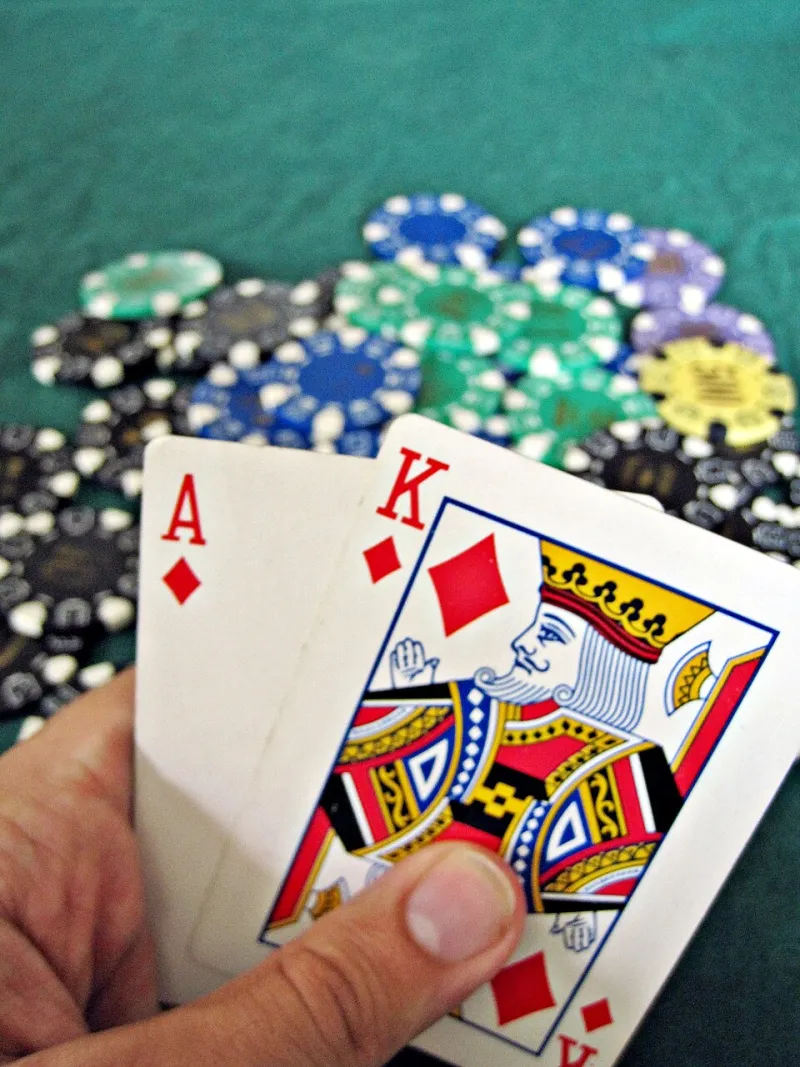
Photo: Images Money, CC BY 2.0, via Wikimedia Commons
There's a moment most regular players know well. You're three-quarters through your session budget, the pokies haven't been kind, and a little voice says: maybe I should move to blackjack. More skill involved, right? Better odds. You'll be in control.
It feels like a rational decision. It almost never is.
At Wild Fortune AU, we see this pattern constantly — and we think it's worth pulling apart, because the gap between what players think they're doing when they switch games and what they're actually doing is pretty significant.
The Comfort Story We Tell Ourselves
The logic goes something like this: slots are pure chance, table games involve decisions, therefore table games give you more agency. And technically, that's not wrong. Blackjack with basic strategy does carry a lower house edge than most pokie titles. Baccarat has relatively clean odds. Roulette... well, roulette is its own conversation.
But here's the thing — the moment you switch matters enormously. If you're moving from pokies to tables because you've done your homework, you're comfortable with basic strategy, and you're approaching it with a fresh mindset and a clear budget, that's a legitimate choice.
If you're doing it because you're down and you want to 'win it back faster', you're not playing smarter. You're chasing. The game type is just the costume the chase is wearing.
What Game-Switching Actually Looks Like in Practice
Research into player behaviour — including studies referenced by Australia's National Centre for Responsible Gambling — consistently shows that game-switching mid-session is one of the stronger indicators of loss-chasing behaviour. It's not that switching is inherently bad. It's that the trigger for switching is almost always emotional rather than strategic.
Players who switch games after a losing run on pokies typically:
- Increase their bet size on the new game to 'catch up'
- Spend more time overall in the session than they'd originally planned
- Apply less strategic discipline because the cognitive load of switching is high
That last point is underrated. Moving from a pokie to a blackjack table mid-session, while you're already a bit rattled, means you're trying to engage a completely different decision framework with a brain that's already been running hot. That's not a recipe for sharp play.
The 'Better Odds' Argument Doesn't Hold If You're Playing Emotionally
Yes, a blackjack table with favourable rules and basic strategy can bring the house edge down to around 0.5%. That's genuinely lower than most online pokies, which typically sit somewhere in the 2–5% range depending on the title.
But those theoretical edges assume optimal, consistent decision-making over a large number of hands. When you're tilted — frustrated, chasing, second-guessing — you're not playing basic strategy. You're playing gut strategy. And gut strategy at blackjack can push the house edge well above what you'd face just sitting back on a mid-variance slot.
The odds on the table don't change. Your ability to exploit them does.
Why 'Variety' Is a Surprisingly Effective Cover Story
One thing that makes game-switching tricky to self-diagnose is that it genuinely feels like variety rather than chasing. And variety sounds healthy, doesn't it? Mixing it up, not getting stuck in a rut, keeping things interesting.
But there's a difference between choosing to explore a new game from a position of comfort and budget clarity, versus pivoting mid-session because you're trying to engineer a different outcome. One is curiosity. The other is a coping mechanism.
Ask yourself honestly: when did you last switch games while you were ahead? Not because you were bored, but just because you fancied something different? If the answer is 'rarely' or 'never', that tells you something about what's actually driving the switch when you're down.
So What Does Playing Smarter Actually Look Like?
If you genuinely prefer table games and want to build that into your Wild Fortune sessions, great — but make that decision before you start, not in response to how the pokies are treating you.
A few things worth considering:
Set your game before you set your budget. Decide what you're playing tonight before you log in. That removes the mid-session rationalisation entirely.
Treat a game switch like a full stop, not a comma. If you want to switch from slots to tables, take a proper break first. Step away, reset, and come back with a clear head and a separate mental budget.
Know your table game strategy cold before you sit down. Blackjack basic strategy is learnable and genuinely useful — but only if you've actually learned it. Winging it at a table while you're already frustrated is the worst of both worlds.
Check the trigger. Before you switch, just pause and ask: am I doing this because I want to, or because the last hour didn't go the way I wanted? Honest answer required.
The Bottom Line
There's nothing wrong with enjoying both pokies and table games — that's part of what makes online platforms like Wild Fortune AU worth logging into. Variety is genuinely one of the fun parts.
But the idea that switching from slots to tables is a strategic upgrade mid-session is mostly a story players tell themselves to justify continuing to play. The game type rarely fixes the underlying issue. And if the underlying issue is that you're chasing, changing the screen in front of you won't change that.
Play the games you enjoy. Just make sure you're choosing them — not reaching for them.